
Interesting Facts About Paper Money
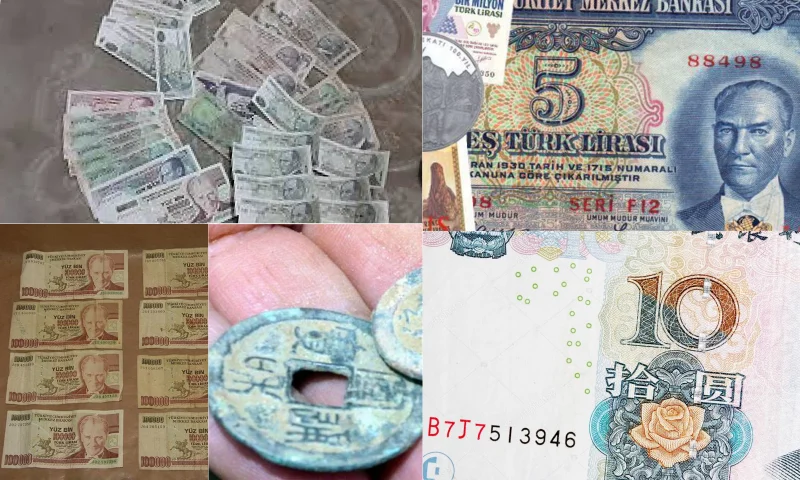
The Chinese were the first to widely use paper money, which is still in common use today
The most important means of purchase used today, money, was first used by the Lydians. In ancient times, instead of money, valuable metals and means of exchange such as seashells were used. The barter system is one of these.
One of the most interesting studies was that people have an emotional connection to money
The Chinese began using paper money in the 900s, before official currencies were printed. The coins used in those times were made of copper, and the situation caused more cost than the money itself. For this reason, Chinese merchants would take the copper coins, draw up a promissory note indicating the amount, and use these notes in trade. After these note exchanges lasted for about 200 years, when the Song Dynasty faced a copper shortage at that time, the state decided that the use of paper money would be more logical and began to implement it. As for Europe, the first paper money was started to be used by the Swedes in 1661, 355 years ago. An interesting thing about paper money was the inflation of 471,000,000% in Zimbabwe in August 2008. The Zimbabwean dollar was losing value due to the country's civil wars, economic policies, and political instability. As a solution, they resorted to printing banknotes worth 100 trillion dollars. However, this did not solve their problems, and hyperinflation continued to rise. As a last resort, they gave up printing money and accepted the use of foreign currencies. It is money, not happiness, love, or similar emotions, that adorns our dreams and aspirations. Another study found that for individuals with high earnings, an emotional dependence on money begins to develop along with making money and success. As people earn more money, they develop an emotional bond, which is due to the hormones secreted and the onset of a psychological addiction process. Managers in sectors where profit maximization is a priority, in particular, develop such dependencies on money, meaning they want to save money to buy the products and services they enjoy, improve their quality of life, and make themselves happy. Since they do not want to spend it this way, it turns into a disease.